

The programmatic industry spent years optimizing for one thing: scale. More impressions, more SSP connections, more open exchange inventory. And for a while, that logic held. But somewhere between the bid requests and the brand lift reports, the math stopped working.
The ANA's latest benchmarks put wasted programmatic spend at $26.8 billion. Not despite the industry's efforts - alongside them.
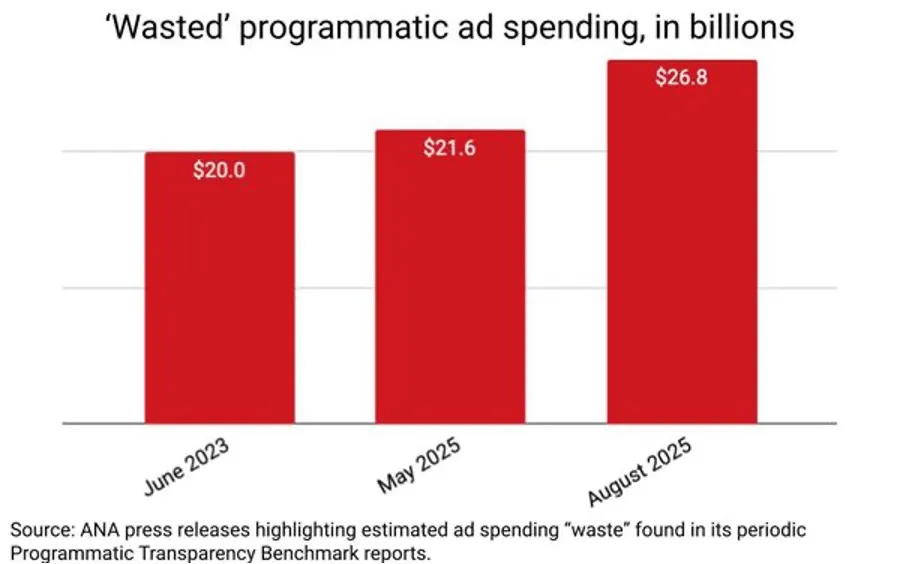
Better tools, cleaner paths, smarter buyers, and the waste figure still went up. That tells you something important: the problem was never just fraud detection or MFA filtering. The underlying assumption was that more supply equals more value.
Buyers have started acting on that. SSP counts are shrinking. Domain lists are tightening. The budget is focusing on a smaller, more vetted set of publishers. The pattern across the industry points in one direction: supply relationships are being re-evaluated based on provable value, and many of them aren't surviving that evaluation.
The new definition of quality supply
Ask ten programmatic professionals what "quality inventory" means, and you'll get ten different answers. That's part of the problem. The industry has been working off an outdated checklist: viewable, brand-safe, low-IVT. The real criteria have moved on.
Here's what serious buyers are evaluating today:
IVT benchmarks by environment - not just "is IVT low" but how it tracks across web, in-app, and CTV quarter over quarter, backed by third-party verification
Supply path transparency - how many intermediaries sit between the buyer and the publisher, and whether each one can justify its presence
Brand suitability, not just safety - MFA inventory often clears every technical safety filter while still underperforming on business outcomes. Being brand-safe and being brand-suitable are different things.
Consent signal integrity - under TCF 2.3, incomplete or corrupted consent strings don't just create compliance risk; they get blocked. Broken signals mean lost bids, full stop.
Curation logic - not a deal ID with a vague label, but a documented rationale: what's in the package, how it was selected, and what happens when it underperforms
None of these is a new concept. What's new is that buyers now have the log-level data to enforce it.
"We're seeing buyers treat supply quality as part of their media strategy, not as a technical checkbox. When a partner can show you IVT benchmarks, consent signal integrity, and a clear curation rationale rather than just a deal ID, it changes the conversation from pricing to performance."
Viktoria Matienko, Head of Account Management at Motorik
Quality supply is a process, not a status
This is where many supply-side teams get it wrong. They treat quality as something you achieve and then maintain passively. In practice, it requires active upkeep.
IVT rates shift by region and device. MFA properties surface, get delisted, and resurface under different domains. Consent signals degrade. The SPO analysis done six months ago doesn't reflect the supply chain today. The SSPs and publishers building durable demand-side relationships are the ones running this as a continuous discipline - regular audits, proactive delisting, transparent communication with buyers about what's happening and why.
That last part matters more than most supply teams acknowledge. Buyers don't expect perfection. They expect honesty and responsiveness when something goes wrong.
"The separation between quality and non-quality supply is becoming a commercial reality. Buyers are not just asking 'is this inventory brand safe?' - they are asking 'can you prove this supply path is clean, and what happens if it isn't?' That accountability is reshaping which partnerships have long-term value."
Dean Efroni, CEO at KinetiX Media and Strategic Advisor
The commercial stakes
Supply quality has crossed from technical consideration into commercial consequence. It now determines which partners stay on the media plan, which curated deals get renewed, and which relationships survive the next round of budget consolidation.
For publishers and SSPs, the question worth sitting with is this: if a buyer pulled your log-level data tomorrow, would the story it tells match the one you've been telling them?
If the answer is uncertain, that's where the work is.
How is your team approaching supply quality in 2026, particularly around SPO governance and consent signal monitoring? Would be glad to hear how others are thinking about this in the comments.